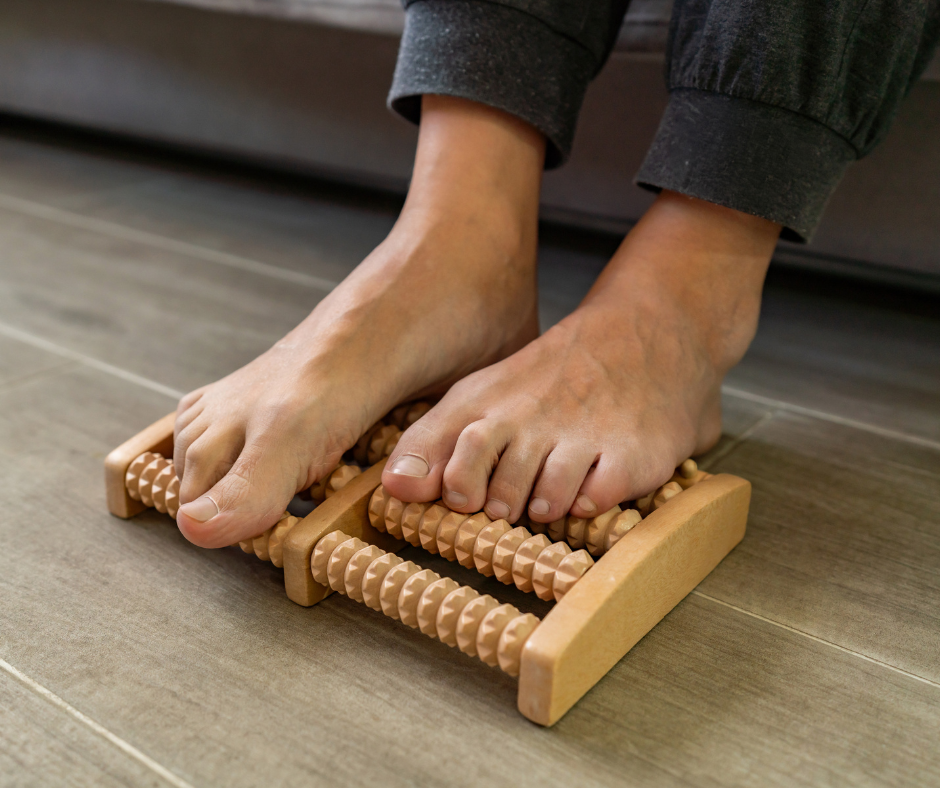
That massage roller you hit after a long day of walking really feels good, doesn’t it? But if you’re relying on this little roller to cure your chronic foot condition magically, or using it as an excuse never to see us at Podiatry Center of New Jersey, then you’re asking too much of it.
The answer is that they are a fantastic tool for management, but they aren’t the end-all be-all. Here is how foot rollers help… and where they fall short.
How Foot Rollers Help Your Plantar Fascia
Throughout the day, and especially while you sleep, the plantar fascia can develop adhesions, essentially sticky spots where the fibers aren’t moving smoothly. Using a foot roller acts as a form of self-myofascial release.
By applying pressure and moving your foot over the roller, you are manually stretching the fascia and increasing blood flow to the area, and it’s this extra circulation that helps bring in the nutrients needed for repair.
The Benefits of Temperature Control Foot Massagers
One of the best ways to use a roller is to incorporate cold therapy. Many people find that rolling their foot over a frozen water bottle or a specialized gel-filled roller provides a double-whammy of relief. The rolling action stretches the tissue, while the cold helps constrict blood vessels and bring down the swelling that causes most of your discomfort.
Why a Foot Roller Isn’t a Total Cure
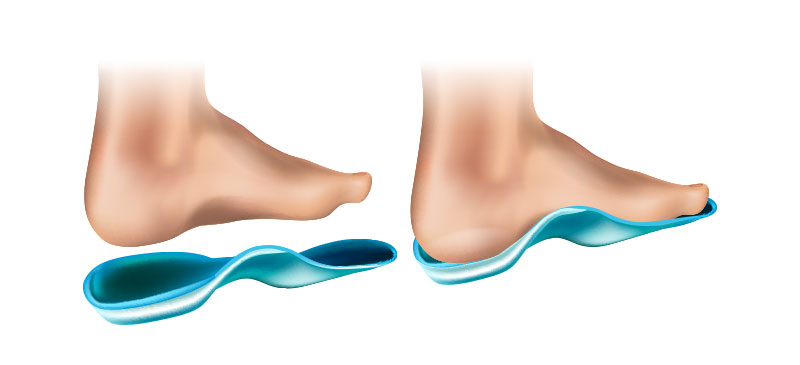
While a massage roller feels incredible, it is important to remember that it is treating the symptom, not the cause. If your foot pain is caused by poor gait mechanics, flat arches, or shoes that lack support, rolling your foot will only provide temporary relief.
If you stop at just rolling, the pain will return as soon as you start walking again. To truly fix chronic foot conditions, you need to combine the roller with other treatments like calf stretches, strengthening exercises, and good-quality shoes.
Tips for Using a Foot Roller Safely
To get the most out of your rolling sessions, follow these simple rules:
- Don’t Press Too Hard: You want to feel a firm stretch, but you shouldn’t be in agony. Pushing too hard on an already inflamed ligament can cause more micro-tears.
- Consistency Matters: Five minutes of rolling every morning and night is much more effective than one long session once a week.
- Go Slow: Rapid rolling doesn’t give the tissue time to adapt. Slow movements are best for breaking up tension.
If you have been using a roller for several weeks and the pain isn’t budging, it is a sign that something deeper is going on. We can help you integrate the roller into a broader plan that addresses the root cause of your pain.
Until then, keep rolling!
If you have more questions about foot care or want to address specific concerns, don’t hesitate to reach out to the expert team at Podiatry Center of New Jersey! Give us a call at (973) 925-4111 or make an appointment online.