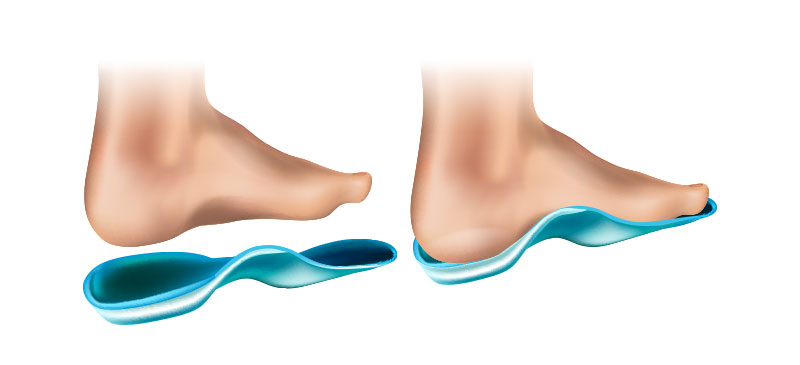
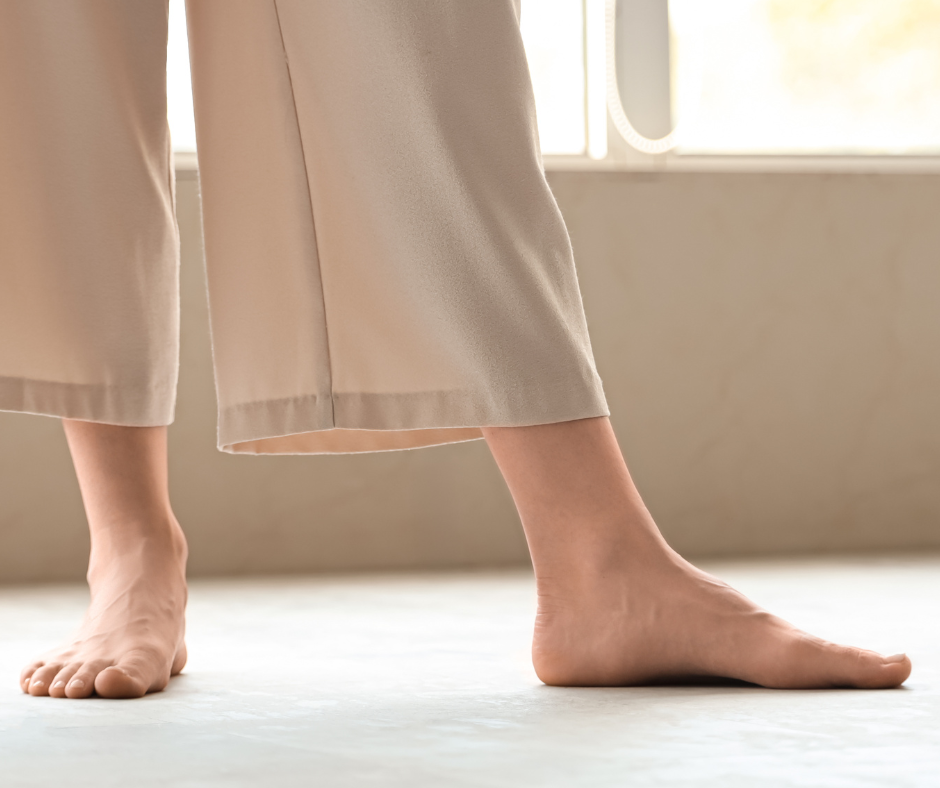
Most people assume having flat feet is something you are born with. You either have high arches or you have pancakes, right? Not necessarily. There is a condition where a perfectly normal arch slowly gives up and collapses in adulthood. We at Podiatry Center of New Jersey refer to this formally as Posterior Tibial Tendon Dysfunction (PTTD), and we’re going over it in this blog.
Dysfunctional Posterior Tibial Tendon
To understand this injury, you have to look at the architecture of the foot.
The posterior tibial tendon travels down the back of the calf, curves around the inside of the ankle bone, and attaches to the bones in the middle of the foot. Its main job is to hold up the arch and support the foot when you push off to walk. It is the bridge cable that keeps the structure lifted.
PTTD happens when this tendon becomes inflamed, overstretched, or torn. Once the cable stretches out too much, it can no longer hold the weight of the body, and the arch slowly implodes. This is why it is often called adult acquired flatfoot.
The Warning Signs of PTTD
PTTD symptoms usually start with pain and swelling along the inside of the foot and ankle, right where that tendon curves around the bone. This area might be tender to the touch or ache after a long walk. As the condition worsens, the symptoms become structural:
- The Collapsing Arch: You might notice the arch flattening out significantly compared to the other foot.
- The Heel Shift: The heel bone often tilts outward as the support fails.
- The Too Many Toes Sign: When looking at the feet from behind, the affected foot turns outward so much that you can see more toes on the outside than you can on the healthy foot.
- The Tiptoe Failure: A major red flag is the inability to perform a single-leg heel raise. Since the tendon is the engine for lifting the heel, a damaged one simply won’t have the horsepower to lift you onto your tiptoes.
Why Does Posterior Tibial Tendon Dysfunction Happen?
Unlike an Achilles rupture, PTTD is rarely caused by a single dramatic moment or injury, and it is almost always a result of long-term wear and tear. It is an overuse injury that happens slowly over time.
Age is a significant factor because blood supply to tendons decreases as we get older, which makes them more prone to fraying.
High-impact sports like basketball or tennis can also accelerate this wear, as can jobs that require standing on hard concrete floors for years.
Carrying extra weight is another major contributor, as it places a heavier load on the arch with every single step.
If you’re worried about your flat feet now, fret not: here’s a blog on relieving flatfoot facts.
If you have more questions about foot care or want to address specific concerns, don’t hesitate to reach out to the expert team at Podiatry Center of New Jersey! Give us a call at (973) 925-4111 or make an appointment online.
https://podiatrycenternj.com/2025/06/8-causes-of-pain-on-the-side-of-your-foot/