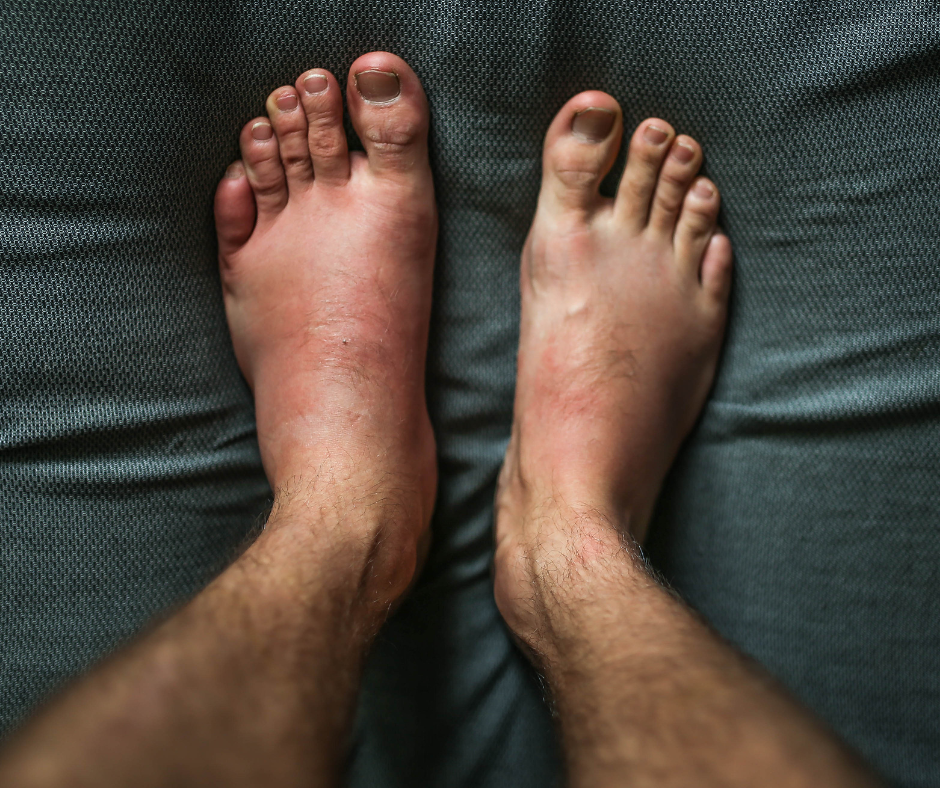
You spend a day out in the cold, maybe shoveling the driveway or just walking the dog, and then come inside to get cozy. Suddenly, your toes feel like they are on fire. They turn bright red, maybe even a worrying shade of purple, and start itching uncontrollably. You might think it’s a weird bug bite or a sudden allergic reaction, but it’s actually a classic winter condition we at Podiatry Center of New Jersey have seen before. No, it’s not an infection, but a circulation issue called Chilblains. We’ll explain more below.
Chilblains and Circulation
Chilblains is caused by a mismatch in how your blood vessels react to temperature. When feet get cold, the tiny blood vessels in the toes constrict, or shrink down, to preserve body heat. This is a normal survival instinct.
The trouble starts when the feet warm up. If they warm up too fast, the larger arteries open up wide to let a rush of warm blood back into the foot. However, those tiny, constricted vessels in the toes are still stiff from the cold and can’t expand fast enough to handle the sudden surge.
The pressure builds up and causes blood to leak into the surrounding tissue. That leakage is what causes the inflammation, the painful swelling, and that maddening itch.
Chilblains and Foot Warming
Here is the kicker: the things used to get comfortable are often the trigger. The biggest mistake people make is coming in from the freezing cold and immediately sticking their frozen feet directly in front of a space heater, a fireplace, or jumping into a scalding hot shower.
That rapid temperature spike is the worst possible thing for cold toes. It forces that blood rush before the small vessels are ready to handle it, which practically guarantees a flare-up of Chilblains.
Who Gets Chilblains?
While anyone can develop these annoying bumps, they are much more common in people who already deal with poor circulation or conditions like Raynaud’s phenomenon. Tight shoes are another major culprit. If winter boots are too snug, they restrict blood flow even before the cold air hits, and make the vessels much more prone to this chaotic reaction. Dampness is also a factor. Wet socks pull heat away from the skin rapidly, which chills the toes faster than dry air ever could.
For more information on risk factors and susceptible groups, check out this article.
For tips on how to treat Chilblains, this is what you’ll want to read.
If you have more questions about foot care or want to address specific concerns, don’t hesitate to reach out to the expert team at Podiatry Center of New Jersey! Give us a call at (973) 925-4111 or make an appointment online.